
Unlocking the Low-ARPU Opportunity: Why the Next Wave of Telco Growth Lies in the Most Overlooked Markets
Evidence from Wireless Federation's global research covering 80+ telecom operators and 30+ case studies shows that the next wave of scalable telco growth lies in low-ARPU, rural, underserved, and first-time data user segments.
Research Team
Despite near-universal mobile broadband coverage—where over 95% of the global population lives under a 3G or 4G footprint—more than three billion people remain offline or under-connected. This gap is not driven by network availability, but by affordability, device access, digital confidence, and relevance of services.
Rethinking Access: Understanding Low-ARPU Ecosystems
Low-ARPU users are not low-value; they are limited by circumstance. Their digital behavior is shaped by a set of predictable constraints:
Sub-Saharan Africa alone represents a US$62 billion digital opportunity by 2030, driven largely by converting existing coverage into active usage.
Across Africa and Asia, once these barriers are reduced, low-income prepaid customers quickly evolve into high-engagement data users. By redefining how they enable access—through affordability, device financing, and relevant digital pathways—operators can move low-ARPU segments from the margins of the network to the center of future growth.
Enabling Adoption: Device Financing, Digital Onboarding, and Habit Formation
Device Financing as a Catalytic Enabler
Device financing has become a critical enabler of digital inclusion, helping low-income and first-time users overcome the high upfront cost of smartphones. By allowing customers to acquire devices through small instalments, pay-as-you-go models, or buy-now-pay-later plans, operators make 4G and 5G smartphones accessible to segments that would otherwise remain on feature phones.
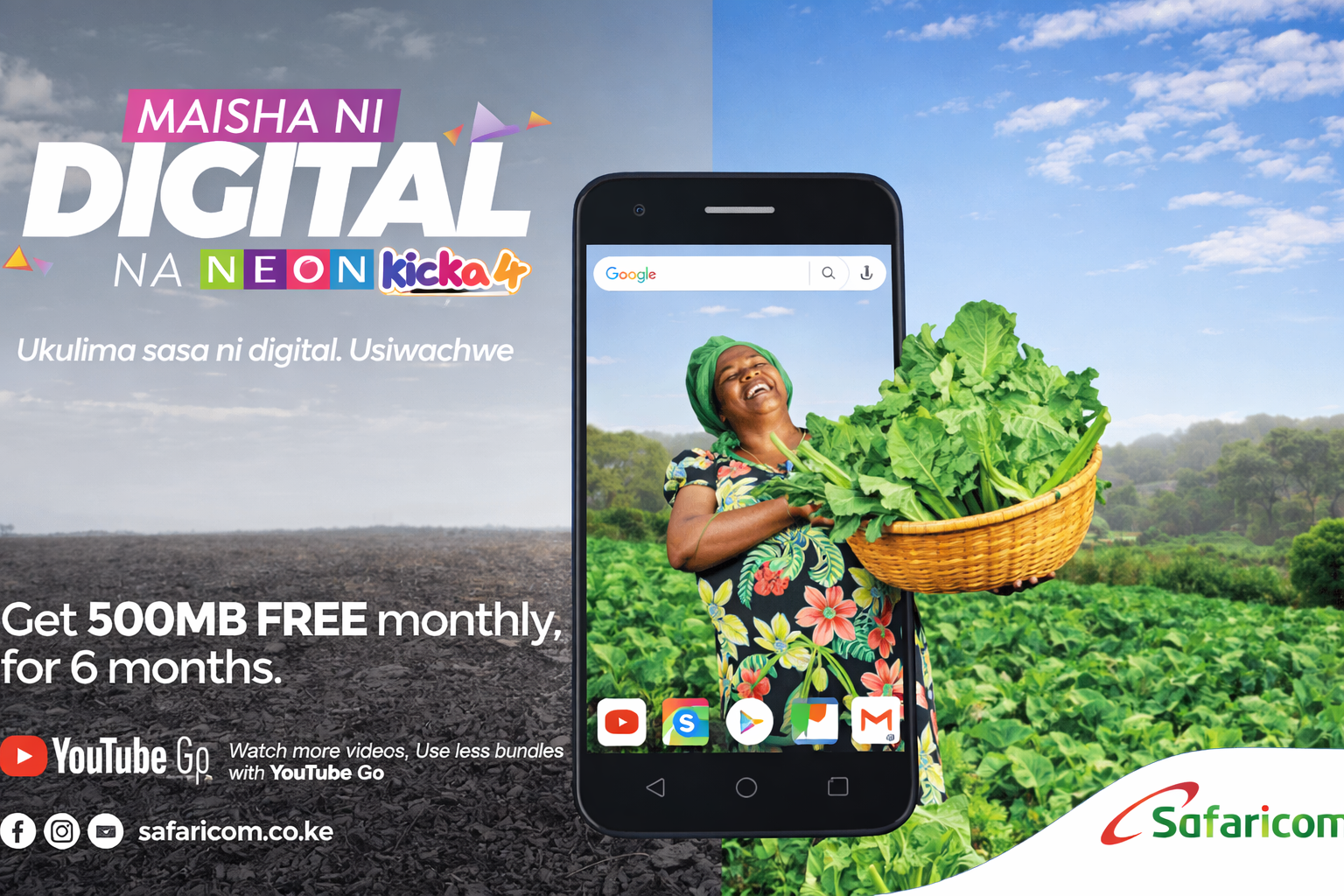
Safaricom's "Maisha Ni Digital"
Launched in partnership with Google, Safaricom began offering low-cost 3G/4G handsets bundled with simplified payment plans and data offers to encourage users to upgrade from feature phones. Safaricom alone sold more than two million financed devices—proof that financing is the fastest accelerator of smartphone penetration.
Onboarding First-Time Users
Behaviorally, the first 7–14 days after a customer acquires a smartphone are crucial. Successful operators reduce friction through welcome data packs, zero-cost trial apps, micro-rewards, and simplified localized onboarding journeys.
Airtel Kenya's GB kwa GB
A free-data campaign where eligible users get 1 GB of free data every week for six months, provided they top up a minimum amount (KES 50) each week. This removes the fear of "wasting data" and encourages users to explore apps, video, payments, and messaging platforms.

Retention and Stickiness Through Rewards
Loyalty programs designed for low-income prepaid users reward small, frequent recharges and encourage regular interaction with the network.
Vodacom NXT LVL
Youth-focused data offer for users under 25, providing 25 GB for R69 over 7 days with dedicated data for TikTok and social media.

MTN Ghana's Spin the Wheel
Gamified rewards that anchor long-term usage even among highly price-sensitive customers through recharge-and-spin promotions.

ACCES Framework: A Practical Adoption Blueprint
At Wireless Federation, we developed the ACCES Framework—Affordability, Coverage, Connectivity, Ecosystem Partnerships, and Smartphone Penetration—to help operators systematically transform underserved users into engaged digital consumers.
A — Affordability
Reducing cost barriers so low-income users can access smartphones and data through subsidies, flexible plans, and financing. Example: Airtel Uganda's Kwata Essimu program lets customers acquire a 4G smartphone through small, manageable instalments using mobile-money–based repayments.
C — Coverage
Extending reliable 3G/4G networks and improving quality in rural and underserved regions. Example: MTN Zambia partnered with Africa Mobile Network (AMN) to extend coverage using solar-powered, self-sustaining stations via a Network-as-a-Service (NaaS) model.
C — Connectivity
Driving regular internet use with simple, low-cost data packs, app-centric bundles, and clear user education. Example: Airtel Nigeria's SmartTRYBE Night Plan offers high-volume data at ultra-low rates during off-peak hours.
E — Ecosystem Partnerships
Collaborating with device makers, fintechs, content providers, and service innovators. Example: Orange's partnership with JUMO offers instant micro-loans through Orange Money using mobile transaction data to assess eligibility.
S — Smartphone Penetration
Enabling mass migration from feature phones to affordable smartphones through BNPL models, ultra-low-cost devices, and trade-in programs. Example: Orange partnered with Google to introduce the Sanza Touch smartphone, a 4G Android (Go edition) device priced around $30.
Expanding Value: From Connectivity to Everyday Utility
Data alone no longer differentiates telcos in low-ARPU markets. Customers stay loyal when operators provide value that impacts daily life—healthcare, education, agriculture, financial services, entertainment. Telcos are now repositioning themselves as digital lifestyle enablers, not just network providers.
🌾 Agriculture: DigiFarm
Safaricom's digital platform empowers smallholder farmers with crop advice, financing, market access, and training. 1.5 million users and 12% revenue growth.
🏥 Healthcare: Teledoctor
Telenor's Teledoctor and Philippines' KonsultaMD offer low-cost telehealth services for millions with limited clinic access.
🌐 Rural IoT: JioKrishi
Reliance Jio's agriculture-focused IoT platform combining sensors with weather data, soil insights, and irrigation alerts.
📱 Super Apps: Vodacom Paisha
Combines digital financial services, payments and everyday utilities—send money, pay bills, top-up airtime, scan-to-pay.
Conclusion: The Low-ARPU Goldmine Is Real
Telcos that thrive in low-ARPU markets share a common approach:
They make smartphones accessible
They guide users through onboarding and habit formation
They create everyday value through digital services
They integrate financial, agricultural, educational, and health solutions
They experiment boldly with rewards, gamification, and micro-payment models
They move from being connectivity sellers to utility providers
This is the new telco playbook—one that turns billions at the bottom of the pyramid into active, loyal, digitally empowered users, driving both inclusion and sustainable growth.