
The Rise of Telco B2B Marketplaces: Redefining the Role of Telecom in the Digital Economy
According to estimates, the global tech and telecommunications B2B market is projected to grow by approximately $150 billion, reaching $1.9 trillion in annual revenue. This growth is fueled by increasing enterprise spending on cloud services, business applications, and communication tools.
Research Team
Telcos are capitalizing on this trend by developing B2B marketplaces that offer a range of digital solutions, from SaaS products to cybersecurity services, positioning themselves as central players in the digital transformation of businesses worldwide.
From Connectivity Providers to Digital Service Enablers
Telcos are shifting from CAPEX-heavy, linear businesses to platform-centric models. B2B marketplaces represent this shift, enabling telcos to aggregate partner solutions—from cloud and cybersecurity to e-commerce and productivity tools—under one unified experience for businesses.
This transformation allows telecommunications companies to move beyond their traditional infrastructure role and become comprehensive digital service providers, offering end-to-end solutions that address the evolving needs of modern enterprises.
Unlocking Multiple Revenue Streams
B2B marketplaces open up multiple revenue streams, including:
1. Subscription-Based Revenue
Recurring revenue from access to SaaS tools and digital solutions. This model provides predictable income streams and strengthens long-term customer relationships.
2. Transaction-Based Revenue / Revenue Sharing
By taking a commission on each transaction made on the marketplace, telcos can generate revenue based on the volume of business conducted, creating a scalable income model that grows with customer success.
3. API Monetization
Offering APIs for third-party developers to create and sell applications on the marketplace allows telcos to tap into a new source of revenue while fostering innovation and expanding the ecosystem.
4. Advertising and Sponsorship
Similar to other digital platforms, telcos can sell advertising and sponsorship opportunities to vendors seeking to reach the businesses using their marketplace.
5. Bundling with Core Services
Telcos can bundle digital products and services with their core connectivity offerings, creating attractive packages for business customers and driving higher average revenue per user (ARPU).
A Roadmap for Building a Compelling Marketplace
Building a B2B marketplace isn't just about launching a portal—it requires vision, execution, and a phased approach. Telcos aiming to launch a B2B marketplace must begin with a clearly defined value proposition. Whether it's helping SMEs digitize or enabling enterprises with sector-specific tools, value clarity is key.
Four Progressive Phases
Bundled Offers
Offering bundled solutions, including connectivity and essential business tools. This phase establishes the foundation and tests market appetite.
MVP Launch
Launching an MVP to test the marketplace concept with real customers. Gather feedback and iterate based on actual usage patterns.
Partner Aggregation
Bringing in third-party vendors and service providers to expand the marketplace's offerings. Build a robust ecosystem of complementary solutions.
Platform Play
Evolving the marketplace into a fully integrated platform with an ecosystem of products and services. Enable network effects and create sustainable competitive advantages.
By following these phases, telcos can ensure that their B2B marketplaces are built on a solid foundation, allowing for sustainable growth and scalability.
Benchmarking Success: Telco Marketplace Implementations
As telcos globally pivot toward becoming digital service providers, successful B2B marketplace implementations are beginning to redefine enterprise engagement and revenue generation. These platforms are built on three strategic pillars — "Connectivity and More," "Ecosystem Enablers," and "Sector Specialists" — to serve the evolving needs of SMEs and large enterprises alike.
1. Connectivity and More
Offering seamless integration with connectivity services to ensure that businesses can access both their core telecom needs and digital tools.
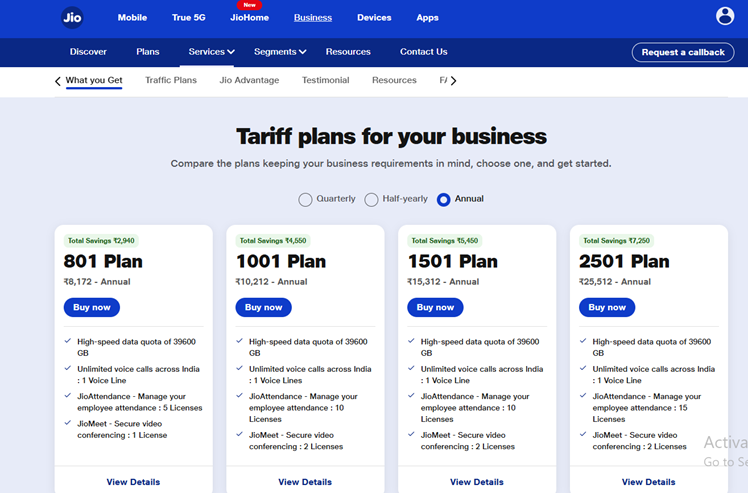
Jio Business Solutions
Jio offers comprehensive business connectivity through a range of annual plans that include high-speed data (39,600 GB), unlimited voice calls across India, and productivity tools like JioAttendance for employee tracking and JioMeet for secure video conferencing.
This integrated approach ensures businesses have everything they need in one package, simplifying procurement and management.
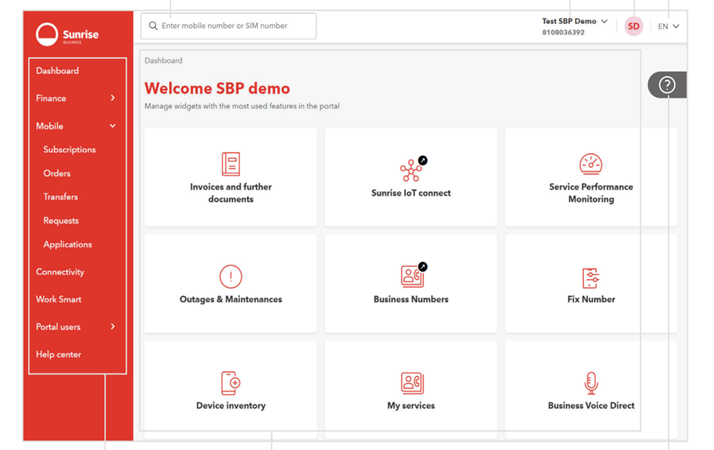
Sunrise Business Portal (SBP)
The Sunrise Business Portal is your gateway to streamlined business management and enhanced productivity. Designed with the needs of fleet managers in mind, the SBP offers a centralized, user-friendly platform to view, order, and manage all the products and services your company purchases from Sunrise.
2. Ecosystem Enablers
Leveraging partnerships with software vendors, cloud providers, and other digital service providers to create a comprehensive ecosystem of services.
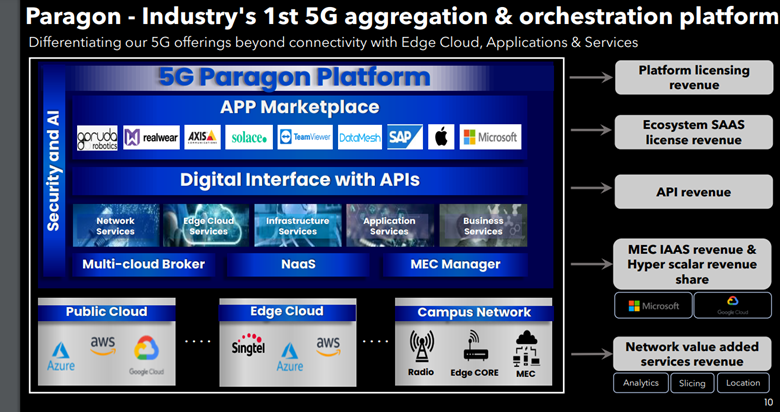
Singtel Paragon
Singtel Paragon acts as a digital transformation hub, creating an integrated ecosystem where businesses can connect with the right partners, technologies, and services including cloud, AI, and analytics.
It fosters a collaborative ecosystem, offering businesses the tools, support, and training needed to drive digital transformation, improve efficiency, and reduce costs.
STC Tajer
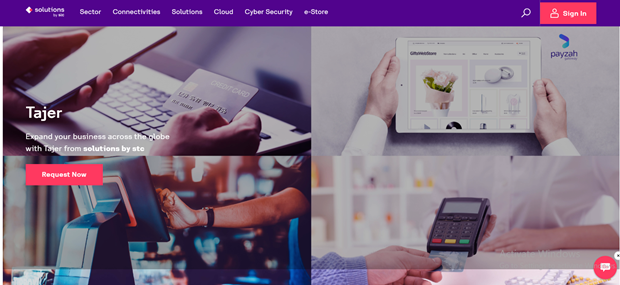
STC Tajer is a comprehensive digital platform developed by solutions by stc, the business arm of Saudi Telecom Company (STC), designed to assist small and medium-sized enterprises (SMEs) in establishing and managing their e-commerce operations.
The platform offers a suite of integrated tools like E-commerce Website Builder, Payment Gateway Integration, Point of Sale (POS) System etc. that simplify the process of setting up and running an online business.
3. Sector Specialists
Tailoring marketplace offerings to the needs of specific industries, whether it be retail, services, consulting, or other business sectors to create a more personalized experience for businesses.
Etisalat SMB Solutions
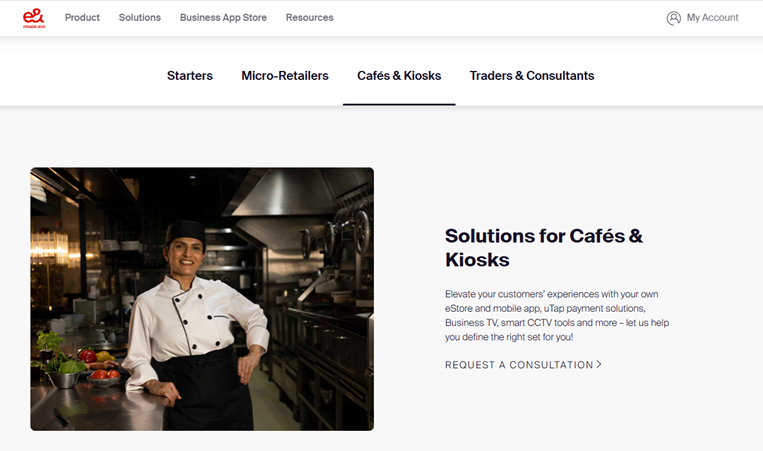
Etisalat's SMB solutions provide customized packages that cater to particular business types such as retail shops, cafes, consultants, or service providers. These solutions are designed to optimize efficiency, reduce costs, and enable growth in each specific sector by offering tools and services that address the unique operational needs of businesses in these sectors.
Empowering SMEs and SOHOs: How Telcos Are Driving Small Business Digitalization
Small businesses are the backbone of every economy, yet many face significant barriers to digital transformation—limited technical know-how, constrained budgets, and a fragmented landscape of tools and vendors.
In response, telcos are stepping up with a powerful proposition: become the digital partner of choice for SMEs and SOHOs by offering bundled, easy-to-use, and affordable solutions via B2B marketplaces.
Bundled Solutions that Do It All
Modern telco B2B marketplaces feature what could best be described as "Business in a Box" plans—comprehensive packages that simplify the complex journey of going digital. These may include:
- •High-speed broadband
- •Microsoft 365 or Google Workspace
- •Business-grade email domains
- •Website builders and hosting
- •Social media integration
- •E-commerce store setup
- •Invoicing and CRM tools
- •Digital marketing credits or campaigns
- •Tech support and onboarding services
Such solutions empower business owners to not just get online but compete online. They eliminate the burden of selecting, integrating, and managing disparate services from multiple vendors.
Leading Examples
1. Vodafone Business Marketplace
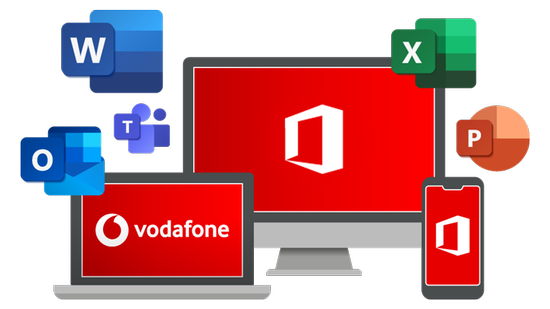
Vodafone Business offers a strong B2B web presence, providing SMEs with website development, hosting, and domain services, along with flexible one-time and monthly packages. It supports mobile app creation, social media integration, e-commerce setup, and search engine advertising. With added tools for digital marketing and SMS campaigns, Vodafone helps businesses build and manage their online presence efficiently, making it a one-stop solution for SME digital transformation.
2. Du Ultimate Plans
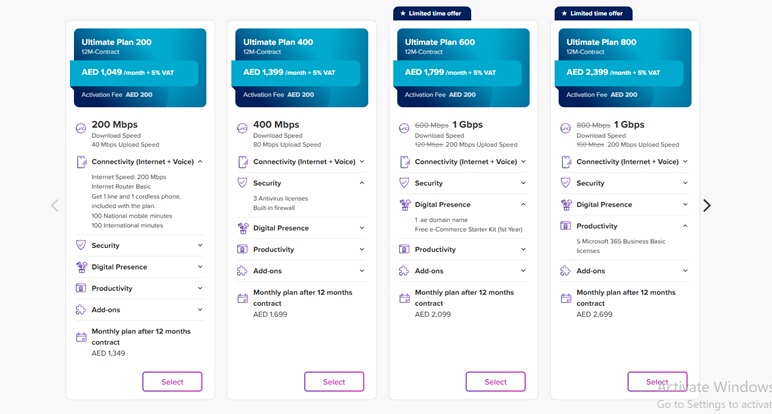
Du Ultimate plans offer Connectivity (Internet + Voice), Security, Digital Presence - 1 .ae domain name, Free e-Commerce Starter Kit (1st Year), Productivity - 8 Microsoft 365 Business Basic licenses. This comprehensive package provides everything a small business needs to establish and grow their digital presence.
3. Batelco's "Business in a Box"
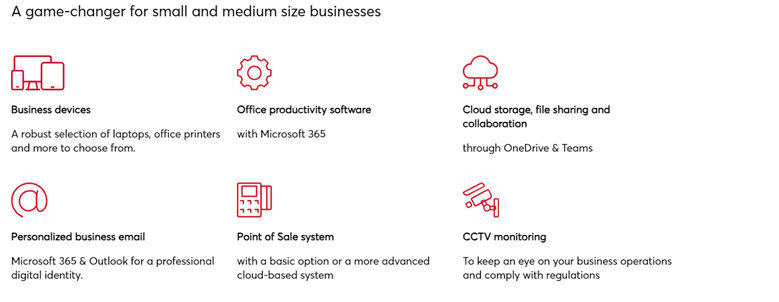
Batelco's "Business in a Box" is a comprehensive service designed to simplify and streamline the communication and connectivity needs of businesses. It offers telecommunications services, internet connectivity, and business applications, tailored to meet the diverse requirements of enterprises. Most importantly it's a per-user per month model which allows customers to scale up and scale down depending on need – providing great flexibility for clients like a co-working space.
Conclusion
The rise of B2B marketplaces represents a pivotal moment for telcos. By evolving beyond traditional connectivity services, telcos are becoming central players in the digital transformation of businesses worldwide.
The key to success lies in adopting innovative business models, building strong ecosystems, and providing valuable solutions for SMEs and SOHOs. With the right strategies and execution, telcos can unlock new revenue streams, drive customer loyalty, and solidify their position as digital service enablers.
As the digital economy continues to expand, telcos that successfully navigate this transformation will be well-positioned to capture a significant share of the $1.9 trillion B2B market opportunity.
For more info on B2B Marketplace, Business in a Box offerings and Partnerships to Expand ICT & SME Digital Revenues, please contact taylor@wirelessfederation.net
About Us
Wireless Federation is a Telecoms Research & Advisory Conglomerate HQ in London, UK focused on helping Digital Service providers, and Regulators, profit in the connected Digital economy with evolving business models. For the last 2 decades, WF has been supporting 500 + Telcos, and 75 regulatory bodies as a research, knowledge and training partner.
The Mandate of WF is to provide its Telco customers with learning and best practices of what other Telcos are doing globally so you won't have to reinvent the wheel.